Why Do We Recommend a Bone Graft After Tooth Extraction?
Dr Heather Equevilley and Dr. Owen Mandanas
In the past, dentists often assumed that the empty socket left in the jawbone after a tooth extraction would heal like any other bone in the body. However, years of clinical observation, along with more recent studies, suggest that this is not the case. One important reason is that the extraction socket is exposed to the oral environment. This means it comes into contact with saliva, food, liquids, air, and sometimes smoke. Unlike other bones in the body that typically heal in a protected, closed environment, the tooth socket heals under constant exposure to external elements.
Additionally, a tooth is not simply part of the jawbone—it is a distinct structure with its own nerve supply, blood vessels, and supporting ligaments. After extraction, the body works to close the socket, but this healing process differs significantly from the healing of a fracture in a long bone, such as in the arm or leg.
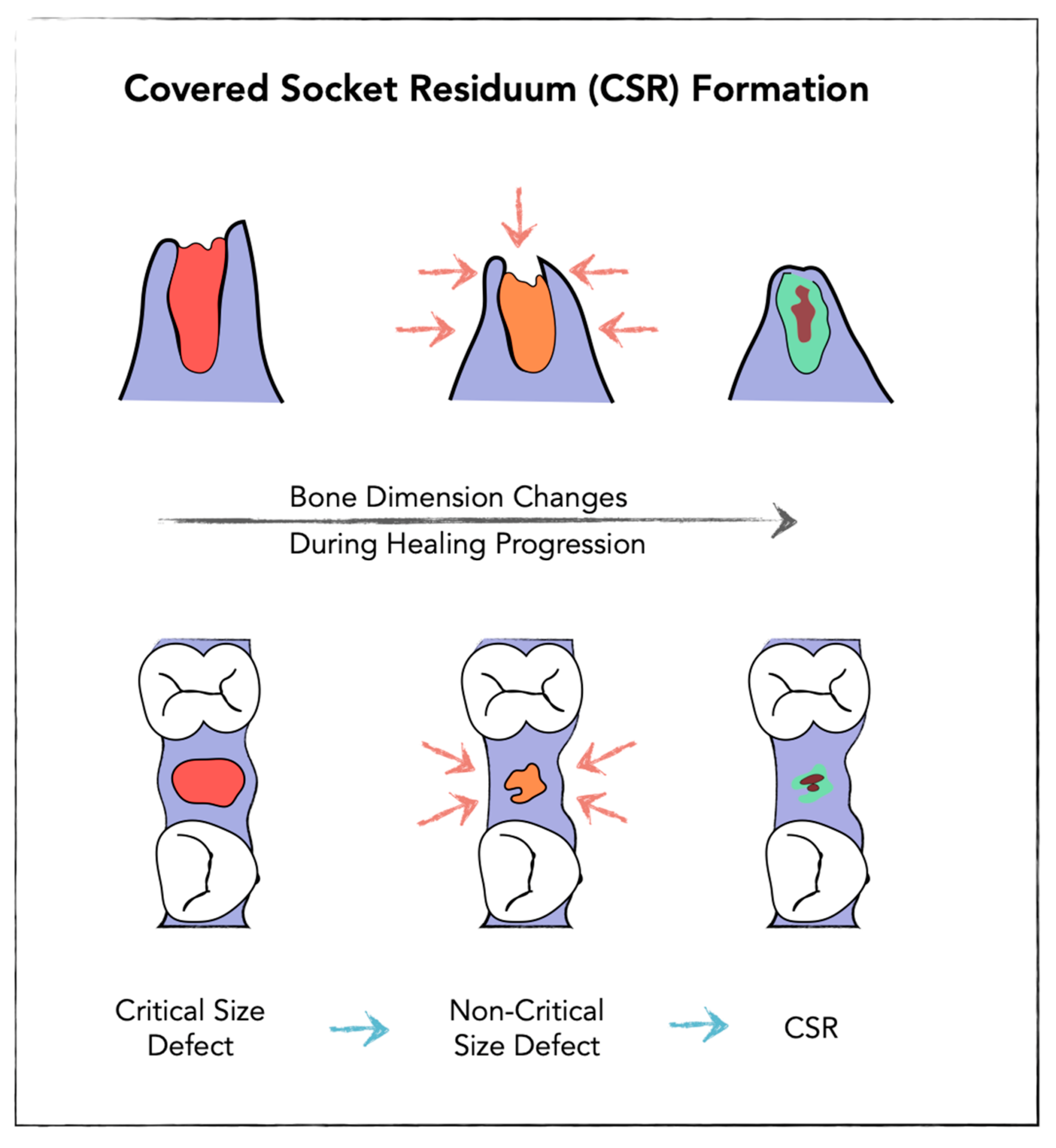
Clinically, dentists frequently observe that the area where a tooth is removed tends to collapse over time. This can occur in multiple directions and may leave behind a void or defect as the body attempts to heal. On radiographs, this finding is sometimes referred to as a covered socket residuum (CSR).
The presence and size of such defects may have implications for oral and overall health. Some studies suggest possible associations with systemic conditions, including cardiovascular and metabolic issues. To determine the exact nature of a defect, it may be necessary to perform a biopsy and have the tissue evaluated by a pathologist.
For these reasons, placing a bone graft at the time of extraction can help preserve the structure of the jawbone, support proper healing, and reduce the likelihood of future complications. https://www.ghanaati-education.com/